BEYOND RHETORIC: GOVERNOR OBorevwori’s GOLDEN FOOTPRINTS IN DELTA STATE

By Anthonia N Okwuolise
Delta State, under the leadership of Governor Sheriff Oborevwori, has witnessed significant developments across critical sectors of the economy and social life, driven by the deliberate implementation of the administration’s MORE Agenda.
Since assuming office, the administration has pursued a balanced and people-oriented development strategy, focusing on education, healthcare, economic empowerment, rural transformation, environmental sustainability, infrastructure and security.
What distinguishes the administration is not merely the volume of projects initiated, but the emphasis on responsible governance, prudent resource management and the translation of public resources into tangible benefits for citizens.
One of the administration’s notable accomplishments has been its ability to execute numerous development projects while maintaining a relatively conservative approach to borrowing. This approach, coupled with the governor’s emphasis on prudent financial management, has contributed to Delta State’s reputation for responsible management of public resources.
For the Oborevwori administration, infrastructure is not simply about constructing roads, bridges, hospitals or schools. These projects are viewed as strategic investments capable of stimulating economic growth, improving mobility, strengthening communities and creating opportunities for the people.
DELTA: A STATE UNDERGOING TRANSFORMATION
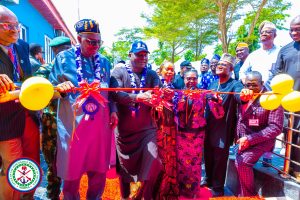
Today, several parts of Delta State bear visible evidence of ongoing infrastructure development. Major projects include the PTI Junction, DSC Roundabout, Enerhen Junction, Otovwodo and Agbor flyovers, as well as the Trans-Warri Road and Bridges Project, Ayakoromo Bridge, Kwale-Beneku Bridge and numerous urban and rural road projects spread across the three senatorial districts.
These projects are significant not only because of their physical presence but also because of their potential impact on commerce, transportation, employment and the overall ease of doing business.
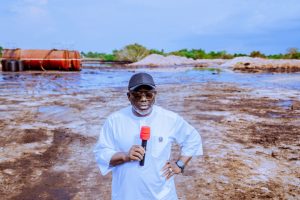
Beyond major highways and bridges, the administration has also embarked on flood-control and drainage projects in flood-prone communities. Urban renewal initiatives in Asaba, Warri, Ughelli, Sapele and other towns are similarly aimed at improving the living environment, stimulating economic activities and creating conditions capable of attracting private investment.
INVESTING IN HEALTHCARE
Healthcare has also received considerable attention under the MORE Agenda.
The administration has invested in modern medical equipment, including CT scan machines, MRI facilities, dialysis machines and 25 modern 4D ultrasound scanners distributed across the state.
More than 150 primary healthcare centres are undergoing renovation and upgrading, while continued investments are being made in healthcare infrastructure and human resources.
The construction of a new College of Health Technology at Ovrode and the Faculty of Medical Sciences building at Southern Delta University, Ozoro, in Isoko North Local Government Area, further demonstrate the administration’s commitment to strengthening both medical education and healthcare delivery.
These investments are important because quality healthcare is not merely a social service; it is a fundamental component of human capital development and economic productivity.
EDUCATION AND HUMAN CAPITAL DEVELOPMENT
In education, the government has recruited thousands of teaching and non-teaching personnel to strengthen the public school system and improve learning outcomes.
The administration has also continued to upgrade educational infrastructure while placing greater emphasis on technical and vocational education. This is particularly important in an economy where young people require practical skills that can translate into employment, entrepreneurship and self-reliance.
Education must prepare young people not only to pass examinations but also to compete, innovate and contribute meaningfully to society. Investments in schools, teachers, technical education and skills development therefore represent investments in Delta State’s future.
EMPOWERING THE PEOPLE
Economic empowerment remains another important component of the MORE Agenda.
Through programmes such as D-CARES, MORE Grants, MORE Biz-Up, WESAP and the Working Fingers Initiative, hundreds of thousands of residents have benefited from various forms of social intervention, financial assistance, vocational training and entrepreneurship support.
The beneficiaries cut across different segments of society, including women, youths, artisans and small-business owners.
Such programmes are particularly significant because sustainable development must extend beyond government infrastructure. It must also empower individuals and families to become economically productive and self-reliant.
AGRICULTURE AND RURAL TRANSFORMATION
The administration has also strengthened its support for farmers through agricultural extension services, farm inputs, rural access roads and other initiatives designed to increase food production and improve livelihoods.
The commitment to rural transformation is equally evident in the provision of roads, bridges, schools, healthcare facilities, water projects and electrification infrastructure in previously underserved communities, including riverine areas.
Several urban and rural water-supply projects have also been rehabilitated and expanded to improve access to potable water and enhance public health.
Development cannot be said to be truly inclusive if it remains concentrated in major cities. The real test of governance is whether people in remote and underserved communities can also feel the impact of government.
SECURITY AS A FOUNDATION FOR DEVELOPMENT
Security is another area in which the administration has demonstrated strategic thinking.
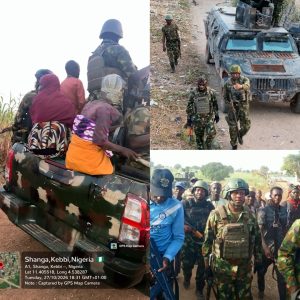
The construction of police divisional headquarters across the 25 local government areas, as part of the proposed state police initiative, represents a significant investment in strengthening the state’s security architecture.
Although policing remains constitutionally under the jurisdiction of the Federal Government, state governments have historically supported security agencies through infrastructure, logistics and other forms of operational assistance in the broader interest of public safety.
For Delta State, the benefits of a safer environment extend far beyond security itself. Improved security protects lives and property, encourages investment, facilitates commerce, safeguards agricultural activities and enables communities to thrive.
A secure Delta is therefore not merely a security objective; it is an economic and developmental necessity.
BEYOND RHETORIC
The most important question in assessing any government is not what it says, but what it does.
Across Delta State, the visible developments in infrastructure, healthcare, education, water supply, rural transformation, security and economic empowerment provide tangible evidence of an administration seeking to translate its policy agenda into practical outcomes.
The MORE Agenda, in this context, is not simply a political slogan. Its real significance lies in the extent to which its programmes and projects improve the lives of ordinary Deltans.
Governor Sheriff Oborevwori’s administration has, within its period in office, left visible footprints across several sectors. The challenge going forward is to consolidate these gains, strengthen accountability, improve the quality and sustainability of projects, and ensure that every community continues to benefit from development.
As the 2027 governorship election approaches, the people of Delta State will ultimately make their judgment based on the record before them.
Continuity should not be about politics alone. It should be about preserving successful policies, sustaining development and building upon achievements that have positively impacted the people.
If the MORE Agenda has delivered meaningful progress, then the conversation should not merely be about changing leadership for the sake of change. It should be about what works, what has been achieved, what remains to be done, and who is best positioned to consolidate the gains already made.
For Deltans, the choice should therefore be guided by performance, vision, accountability and the prospect of sustained development.
The golden footprints of Governor Oborevwori’s administration are already visible. The task ahead is to ensure that those footprints become a lasting pathway to greater prosperity, stronger institutions, wider opportunities, peace, security and sustainable development for every Deltan.