NAF Receives 15 Aircraft in 2 Years, Additional 49 Platforms Expected in 2026 – CAS
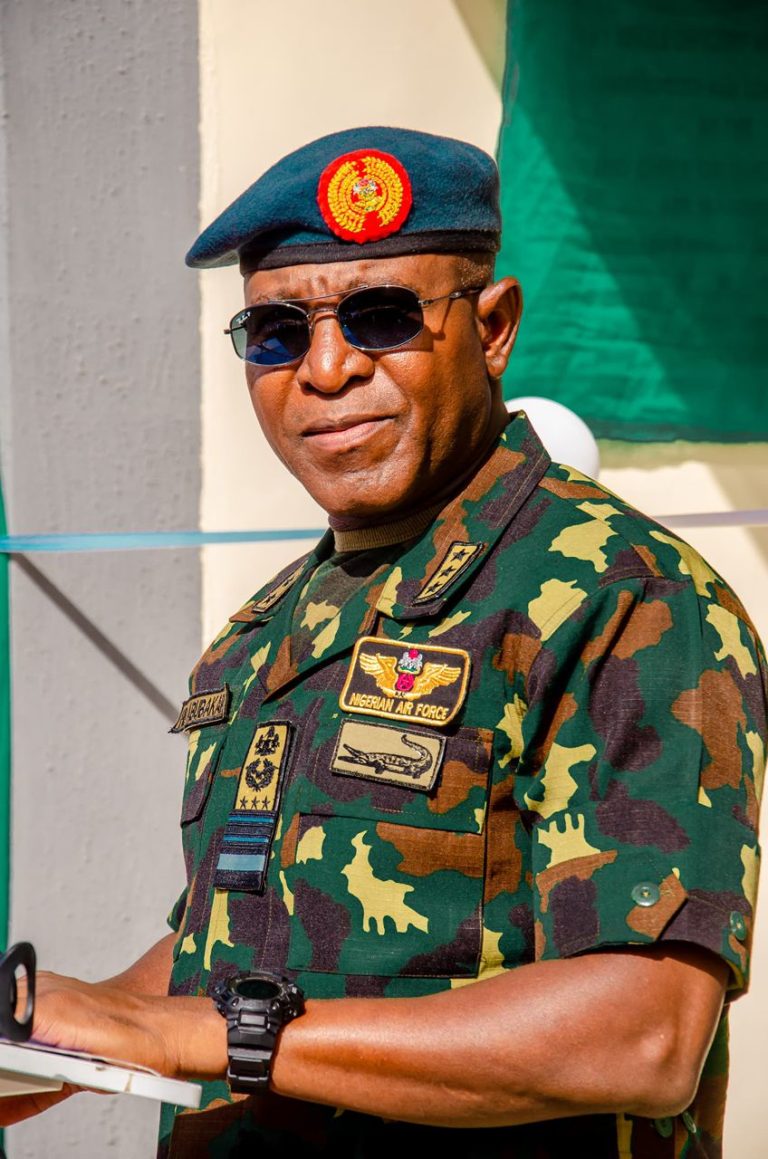
The Chief of Air Staff (CAS), Air Marshal Hassan Abubakar has briefed expanded media executives in the country on his two years achievements.
He also detailed his efforts to transform the NAF into an agile and resilient force, a move he said is fully on course.
Our goal
He said that his ultimate goal is to bequeath to the nation a well-equipped Service that can operate effectively, singularly as a Service or jointly with other Services to deliver airpower in any operational environment.
Received 15 brand new aircrafts in 2 years
According to him, in the last 2 years, the NAF has reached new heights in operational capabilities. Fifteen brand-new aircraft were received by the NAF, including 6 T-129 ATAK helicopters, 2 AW-109 Trekkers, 3 Beechcraft King Air aircraft and 4 x Diamond 62 aircraft.
Expected platforms
An additional 49 platforms are expected before the end of 2026.
They include 3 CASA 295 aircraft, 10 AW 109 Trekker helicopters, 12 AH 1Z helicopters and 24 M 346 fighter aircraft.
He stated that these new acquisitions reinforce readiness to reposition the NAF to effectively meet the air power demands of Nigeria.
Air Marshal Abubakar disclosed that the delivered platforms have greatly enhanced Nigerian Air Force operational effectiveness, enabling the Service to fly over 4,500 hrs in 2,304 sorties for 1,974 CTCOIN missions within the past year.
Anti-banditry operations
Similarly, the Nigerian Air Force flew over 4,670 hrs in 2,713 sorties for 2,610 anti-banditry missions as well as 1,450 hrs in 453 sorties for 366 counter-crude oil theft missions between 2023 and 2024.
Between January to May this year, the Nigerian Air Force has already flown over 832 hrs in 469 sorties for CTCOIN missions, 2000 hrs in 919 sorties for anti-banditry missions as well as 751 hrs in 340 sorties for counter-crude oil theft missions. All these missions contributed decisively to the attainment of operational objectives and enhancing our national security.
Conducted first ever in-country 4800 hrs inspection
It is also gladdening to report that through the meticulous efforts of our aircraft and armament engineers and technicians, we conducted the first ever in-country 4800 hrs inspection on the Do 228 aircraft.
Reactivated Aircraft
Additionally, we successfully reactivated a DO-228 aircraft that had been grounded for about 23 years.
Some other aircraft reactivated include 2 AW 109EM, one Mi 35p and one Mi 171 helicopters, and 1 ATR 42 aircraft.
Platforms under reactivation
Platforms currently undergoing reactivation include 1 Super Puma helicopter, 1 Citation 680 aircraft, 1 ATR 42 aircraft, 1 Bell 412 helicopter and 2 AW 109EM helicopter.
Through NAF maintenance efforts, we have achieved an average serviceability rate of about 72 per cent, enabling the NAF to sustain its operations and contribute effectively to the enhancement of Nigeria’s national security.
Operation HADIN KAI
Our air operations have neutralised several high-value targets, dismantled logistics networks, and restored hope to communities plagued by insurgency.
From June 2023 to date, over 3496 terrorists were neutralized, while 775 structures/logistics and 218 combat vehicles were destroyed by the Air Component Operation HADIN KAI in the Northeast.
Operation FANSAN YAMMA.
Furthermore, the Air Components of Operation FANSAN YAMMA have conducted several independent and joint operations to restore peace within their Areas of responsibility in the Northwest.
From October last year to date over 2,154 terrorists have been neutralized, while 669 structures and about 271 motorbikes were destroyed by the Air component Operation FANSAN YAMMA.
Operation Delta Safe
In Operation DELTA SAFE, the kinetic and non-kinetic employment of air power has had significant positive impact on the Nigerian economy.
As a result of our renewed onslaught, through the projection of air power, I am happy to report that Nigeria’s production of crude oil and condensates have improved significantly from the levels in 2023.
Challenges
Yet, where challenges occurred, the NAF did not shy away, taking full responsibility for mishaps and committing to continuous improvement in operational safety and civilian harm mitigation.
Just last month, the NAF launched its civilian harm mitigation and response Plan which will guide the effective employment of airpower to prevent collateral damage and unintended harm to innocent civilians.
Welfare/Training
Beyond the frontlines, the welfare of our personnel remains a top priority. Over 482 infrastructural projects were initiated across NAF bases, with 30% focused on accommodation.
This has reduced the housing deficit by 25%, with a target of 50% by mid-2025.
In the past 24 months, training and capacity development have been intensified.
Thousands of officers and airmen have been trained locally and abroad.
Within the last year alone over 565 personnel completed foreign courses, comprising 177 flying courses and 455 ground training courses.
Meanwhile, new simulators and immersive learning technologies have also been deployed, preparing the NAF for the future of warfare.
Other Challenges
let me briefly talk about some challenges impeding our efforts in the employment of air power for enhanced national security.
Funding is obvious already, especially given the current economic realities.
Also, at present, all geo-political zones in the Country have one or more joint military or multi-agency operations ongoing.
Hence, the Nigerian Air Force has had to frequently redeploy, re-role and reassign its limited air assets to conduct a wide range of air operations and missions across vast geographical areas in the Country.
This has overstrained and limited the ability of the Service to concentrate force in time and space, which is a cardinal principle of war that is key to success in warfare.
Lastly, international politics has become a crucial challenge. Western sanctions against some countries, where a significant percentage of Nigerian Air Force aerospace equipment comes from, have hindered the Service’s procurement of aircraft, spares, maintenance activities and training, thereby negatively impacting on our projection of air power.
Additionally, some countries and international organizations link arms sales to human rights conditions.
Accordingly, the sale of arms and attendant spares have been delayed based on perceived or actual human rights abuses.
This has delayed the availability of these needed munitions and aircraft with negative consequences on our capacity to deliver air power for national security.
Conclusion
Ladies and gentlemen, in sum, from asserting control over our skies to advancing human capital, the Nigerian Air Force has, more than ever before, achieved great success.