CDS WARNS OF AI-DRIVEN PSYCHOLOGICAL WARFARE AS BURATAI DEMANDS TRANSPARENCY IN $1BN ARMS PROCUREMENT
By Anthonia N. Okwuolise, Abuja
Nigeria’s security architecture came under renewed scrutiny on Monday as the Chief of Defence Staff, General Olufemi Oluyede; Minister of Defence, General Christopher Gwabin Musa (retd.); former Chief of Army Staff, Lieutenant-General Tukur Buratai (retd.); and the President of the Defence Correspondents Association of Nigeria (DECAN) called for stronger intelligence operations, advanced technology, transparent defence procurement and greater institutional accountability in the fight against insecurity.
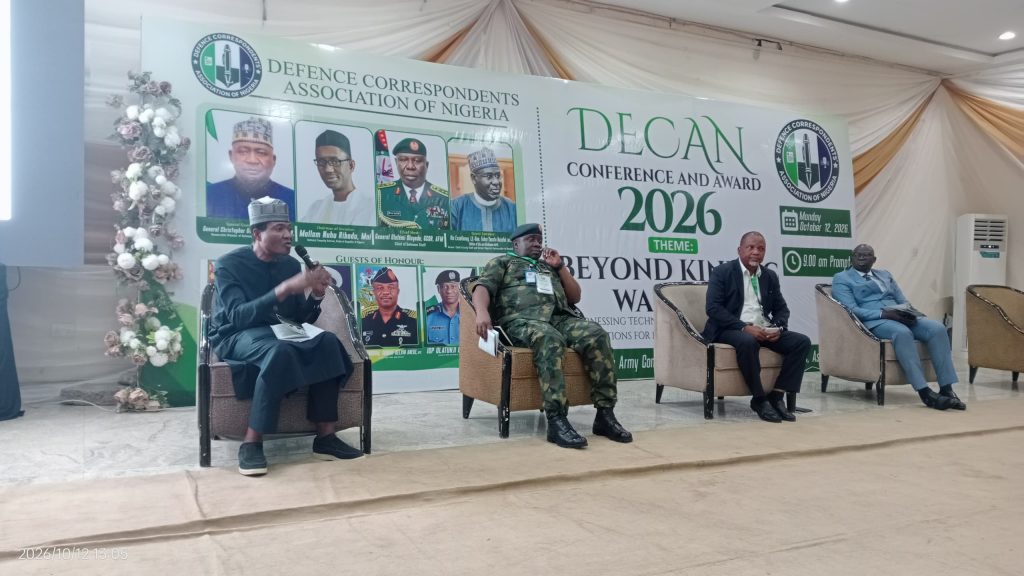
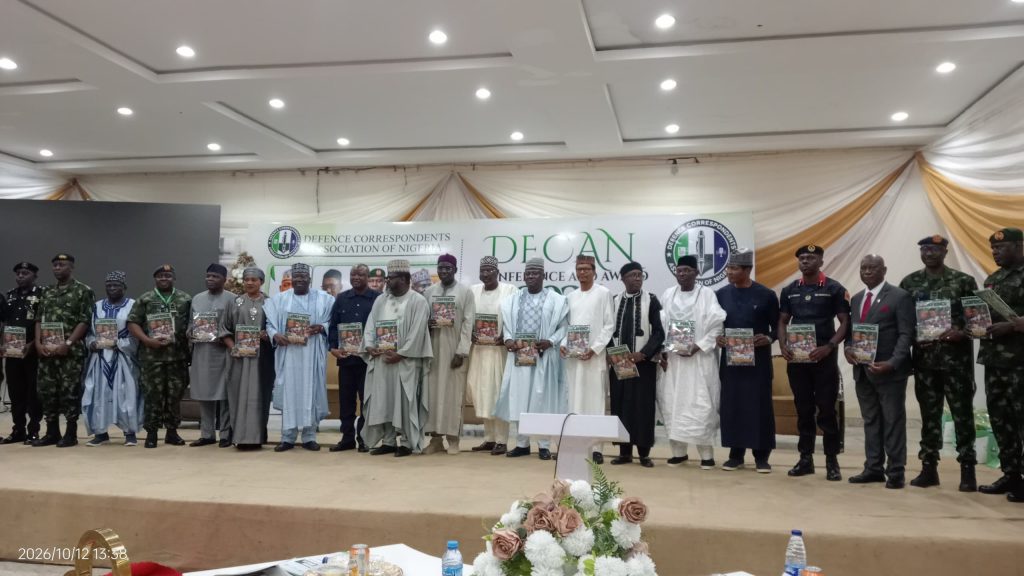
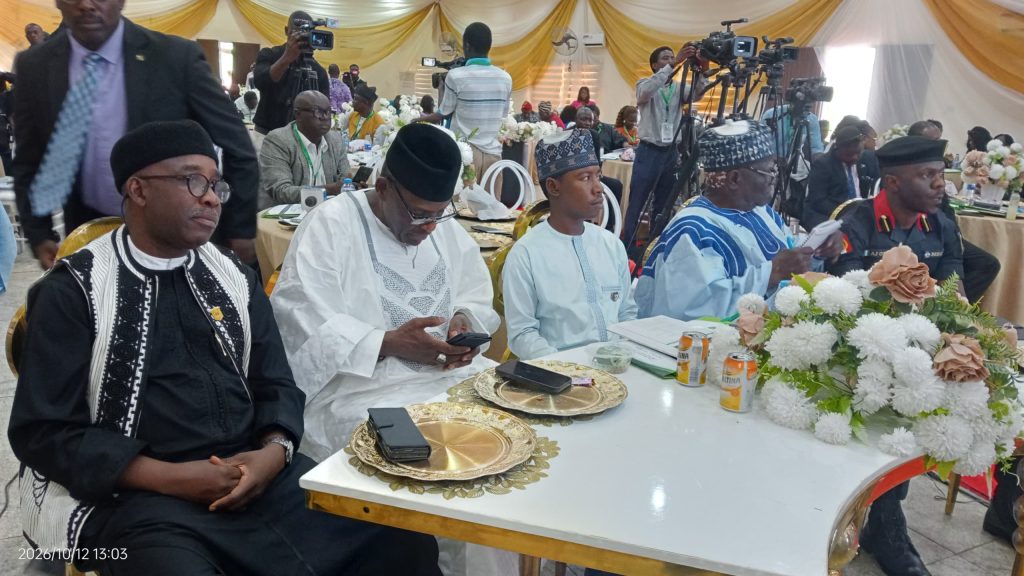
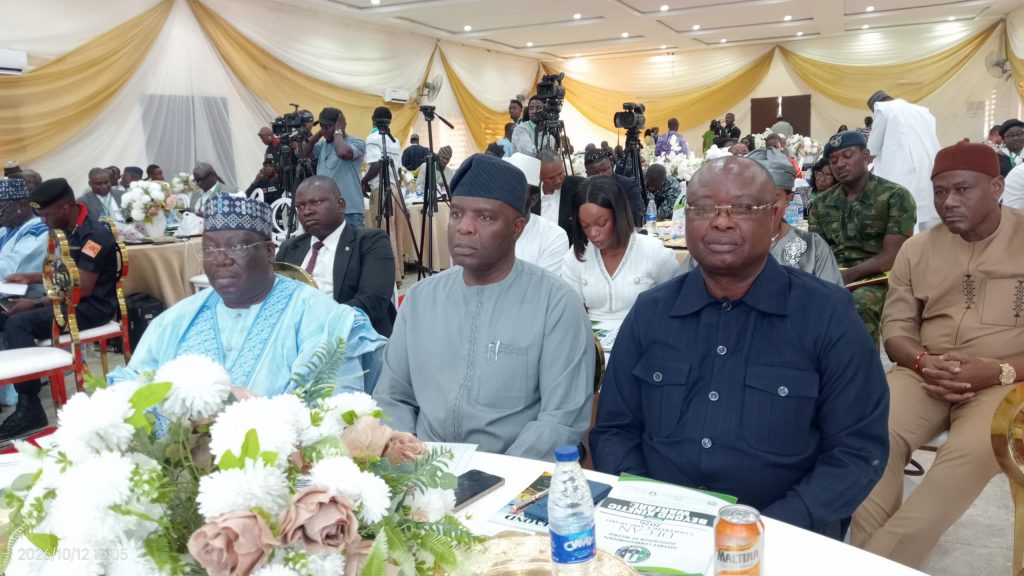
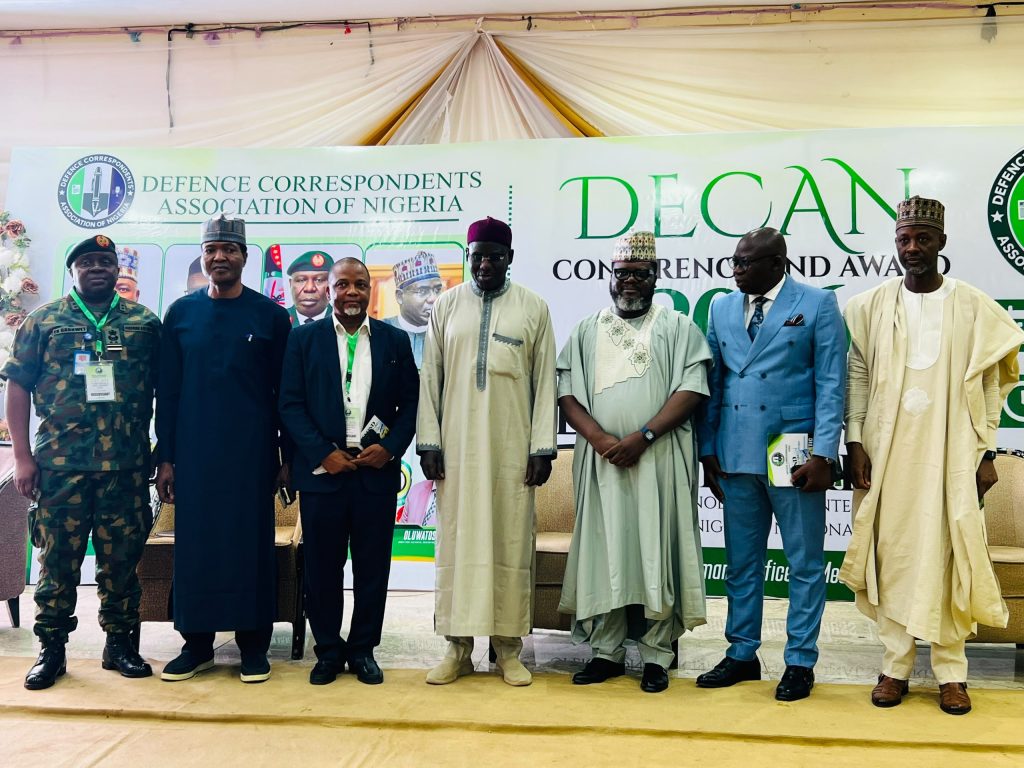
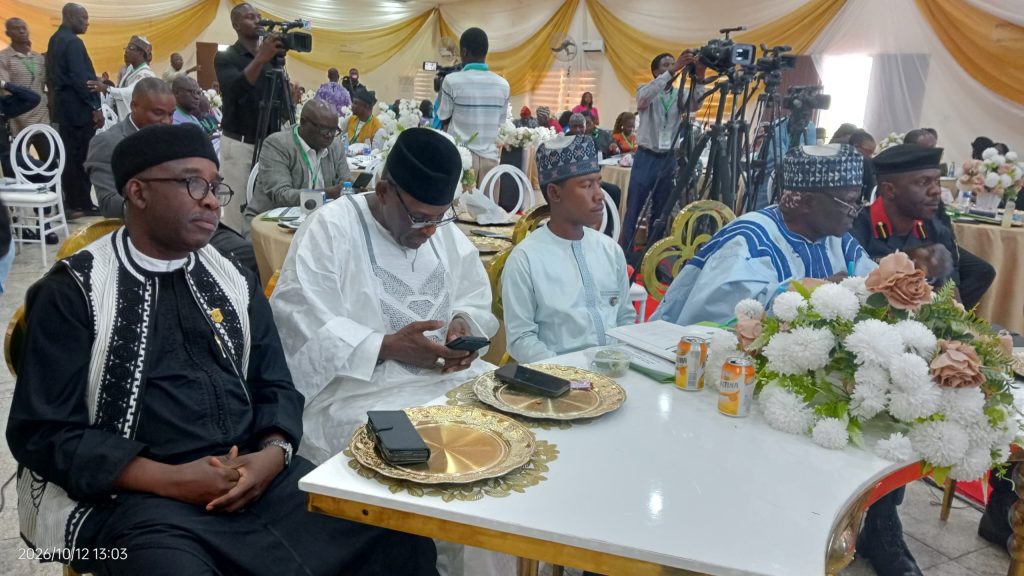
Speaking at the DECAN 2026 Conference and Awards in Abuja on October 12, the key figures highlighted the growing complexity of Nigeria’s security challenges, warning that conventional military firepower alone could no longer guarantee success against terrorists, bandits, kidnappers and other criminal networks. They stressed that the country must strengthen its capacity to detect threats early, counter digital misinformation, improve intelligence sharing and ensure that public resources allocated to national defence deliver measurable results.
The conference, themed “Beyond Kinetic Warfare: Harnessing Technology and Intelligence-Led Operations for Nigeria’s National Security,” brought together discussions on the changing nature of modern warfare, the role of technology in military operations, the importance of responsible defence reporting and the urgent need to build public confidence in security institutions.
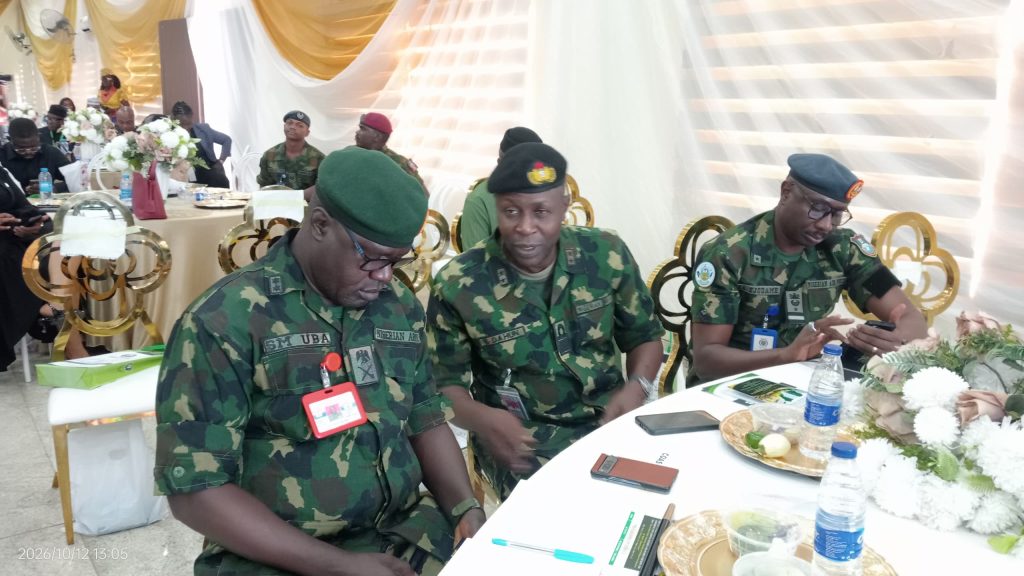
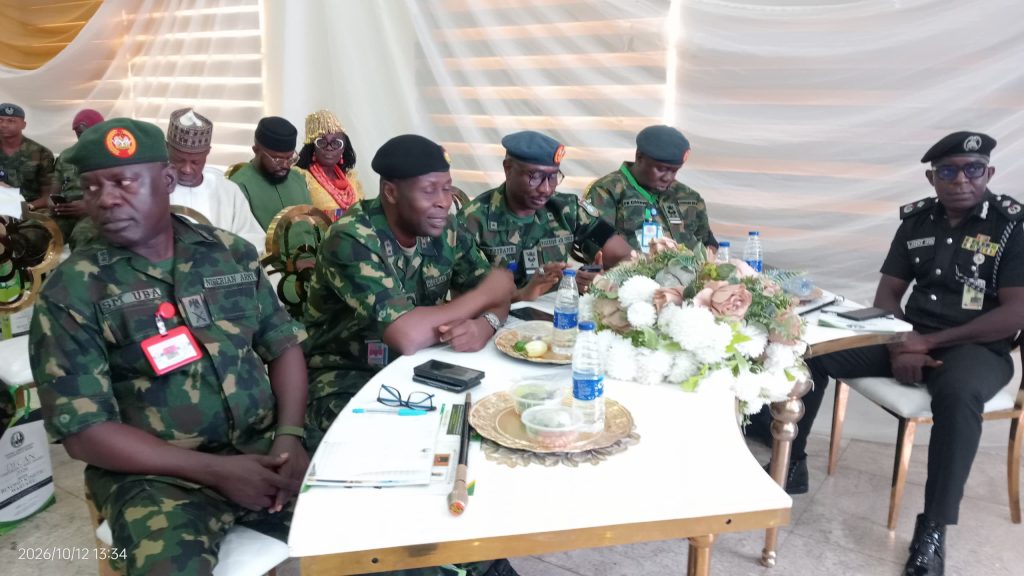
Representing the Chief of Defence Staff, General Oluyede, the Director of Defence Information, Major-General Samaila Uba, warned that artificial intelligence-generated videos, manipulated photographs and cloned voices were increasingly being used as instruments of psychological warfare capable of misleading the public, spreading panic and undermining confidence in the Armed Forces.
According to the CDS, the modern battlefield has expanded beyond conventional combat zones to include digital platforms and information networks, where false narratives can compromise military operations and weaken the relationship between the military and the citizenry.
“These deepfakes are not mere misinformation; they are weapons of psychological warfare aimed at eroding public trust in the Armed Forces and rupturing the vital bond between the military and the citizenry,” Oluyede warned.
He explained that a single fabricated video or manipulated recording could endanger troops, trigger public anxiety and undermine months of carefully planned military operations. He therefore stressed the need for the Armed Forces to strengthen their technological capabilities while ensuring that the public is better equipped to identify and reject misleading information.
Oluyede disclosed that the military was investing in non-kinetic capabilities, including space-based surveillance, geospatial intelligence, artificial intelligence-enabled decision-support systems and joint intelligence fusion to improve threat detection, operational planning and the protection of Nigeria’s national interests.
He also highlighted initiatives under the Defence Space Administration, including the expansion of modular earth-observation outposts into operational theatres and the establishment of the Defence Space School to develop specialised personnel for technology-driven military operations.
The CDS maintained that the objective was to build an Armed Forces that was not only combat-ready but also technologically advanced, intelligence-driven and capable of responding effectively to emerging threats.
He urged defence correspondents to verify sensitive operational information through appropriate channels at Defence Headquarters before publication and to educate the public on identifying synthetic media and debunking fabricated claims attributed to the military.
His warning underscored the increasing responsibility of journalists in an era when misinformation can spread rapidly across social media platforms, sometimes reaching millions of people before accurate information becomes available. He encouraged defence reporters to embrace evidence-based journalism that strengthens public understanding of security operations without compromising legitimate operational requirements.
While the CDS focused on the technological dimensions of modern warfare, former Chief of Army Staff, Lieutenant-General Tukur Buratai (retd.), drew attention to the longstanding controversy surrounding a $1 billion defence procurement fund approved during his tenure, calling on the Federal Ministry of Defence to publish the relevant records and provide a comprehensive account of how the money was managed.
Buratai maintained that the funds did not pass through his personal hands or the accounts of the Nigerian Army, Navy or Air Force. He argued that the ministry responsible for administering the procurement process should provide the necessary documentation to clarify how the funds were allocated and spent.
“The $1 billion was approved by the National Economic Council for defence procurement. Not a single dollar of that fund passed through my hands or through the accounts of the Nigerian Army, Navy, or Air Force,” he stated.
The retired Army chief described allegations linking the funds to political purposes as politically motivated and malicious, arguing that the controversy had continued to affect the reputations of military service chiefs without a sufficiently detailed public explanation of the procurement process.
He traced the controversy to allegations that emerged during the 2019 election period and maintained that the absence of a comprehensive public account had allowed questions surrounding the funds to persist.
“The Ministry of Defence must own a procurement record. The $1 billion arms procurement controversy festered because the institution that managed the funds, the Ministry of Defence, remained silent while Service Chiefs absorbed criticism,” Buratai said.
His demand has renewed attention on the importance of documentary evidence in resolving questions surrounding public expenditure, particularly funds allocated to national defence at a time when Nigeria was confronting serious security threats.
A conclusive account of the procurement process would require relevant financial records, contract documents, supplier details, delivery reports and appropriate audit findings to establish how the funds were disbursed and whether the equipment was delivered in accordance with contractual obligations. Buratai’s assertion that he did not personally control the funds does not, on its own, establish how the money was ultimately spent, making the publication of verifiable records central to resolving the controversy.
To promote greater transparency, he proposed the establishment of a Defence Procurement Transparency Portal through which non-sensitive information about defence contracts could be made publicly accessible. The proposed platform would provide details about contracting entities, broad contract specifications and expected delivery timelines, while safeguarding information whose disclosure could compromise national security.
He argued that such a system would enable journalists and members of the public to monitor procurement activities more effectively, identify delays and assess whether approved projects were being completed as expected.
Buratai also called for quarterly accountability bulletins summarising court-martial proceedings involving alleged human rights violations and operational misconduct. He stressed that credible allegations should be investigated and prosecuted where supported by evidence, maintaining that military personnel must remain subject to the law.
“The military is not above the law,” he declared.
His position reinforced the argument that national security and institutional accountability should complement one another, with appropriate safeguards to protect operational secrets while ensuring that public funds are properly accounted for and allegations of misconduct are handled in accordance with the law.
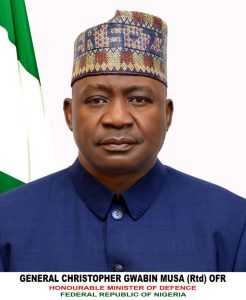
The Minister of Defence, General Christopher Gwabin Musa (retd.), also called for stronger intelligence coordination and technology-driven military operations, warning that conventional firepower alone was insufficient to address the increasingly complex security threats confronting Nigeria.
Represented by his Special Adviser on Foreign Relations, Air Commodore Stephen Ogunmodele (retd.), the minister observed that terrorist organisations and criminal networks were exploiting information technology, financial systems and weaknesses in institutional coordination to advance their activities.
He urged security agencies to strengthen their ability to identify threats early, understand the networks behind criminal activities, anticipate adversaries’ intentions and conduct precise operations capable of preventing attacks before they occur.
Musa cautioned against measuring military effectiveness exclusively through visible engagements, arrests and territorial recoveries, noting that successful intelligence operations could prevent attacks without necessarily producing dramatic public evidence of military action.
“The absence of a visible engagement should therefore not automatically be interpreted as an absence of action,” he said.
The minister described technology as a force multiplier whose effectiveness depended on trained personnel, reliable systems, professional judgment and sound operational doctrine. He reaffirmed the Ministry of Defence’s commitment to improving situational awareness, intelligence coordination and operational decision-making, stressing that investments in modern equipment must translate into practical improvements in the country’s ability to protect lives and property.
On relations between the military and the media, Musa maintained that national security and press freedom should not be treated as opposing interests. He urged journalists to uphold accuracy, fairness, independence and professionalism while exercising caution over the premature publication of sensitive operational information that could expose military personnel, compromise missions or endanger civilians.

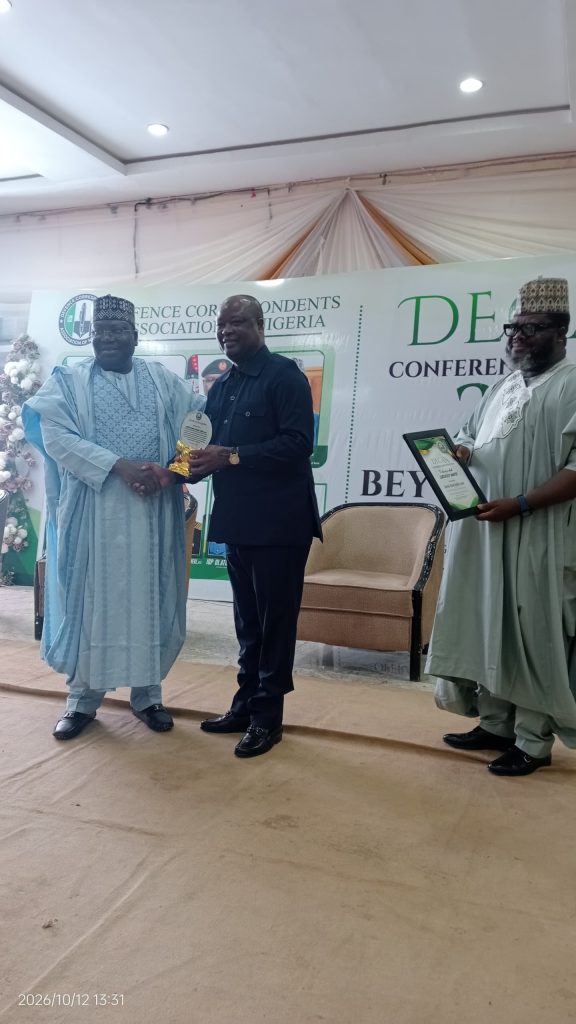
He also emphasised that security institutions had a responsibility to communicate accurately and promptly within legitimate operational limits, allowing citizens to remain informed while preserving operational security and public accountability. The minister congratulated recipients of the DECAN awards and called for sustained cooperation between the Armed Forces and defence correspondents in advancing national security and responsible public communication.
The President of the Defence Correspondents Association of Nigeria, in his address, called for increased investment in artificial intelligence, cybersecurity, data analytics, satellite surveillance, unmanned systems and secure communications to improve Nigeria’s capacity to detect, prevent and respond to security threats.
The association warned that terrorist organisations and criminal networks were increasingly exploiting technology for communication, recruitment and coordination, making intelligence gathering, early threat detection and effective information sharing indispensable to national security.
It called for a coordinated approach involving the military, police, intelligence services and other relevant agencies, supported by trained personnel, effective institutions and sound policies. The DECAN President cautioned that sophisticated equipment alone would not resolve Nigeria’s security challenges without adequate training, reliable systems, effective maintenance and stronger inter-agency cooperation.
The association further urged defence correspondents to maintain high professional standards, verify information and report emerging threats responsibly. However, it warned that operational security should not be used as a justification for suppressing legitimate journalism, independent scrutiny or public demands for accountability.
The conference also addressed the Nigerian Air Force aircraft crash that claimed the lives of personnel and passengers. The DECAN President expressed condolences to the bereaved families and called for a thorough, professional investigation into the circumstances surrounding the tragedy.
The association expressed solidarity with the Nigerian Air Force and urged the relevant authorities to apply lessons from the incident to improve aviation safety, operational procedures and personnel protection. A comprehensive investigation, it maintained, would be important in establishing the circumstances of the crash and identifying any necessary corrective measures.
The discussions at the conference came against the backdrop of the Federal Government’s broader security agenda, which includes a proposed five-year Strategic Defence Operations Plan and announced salary increases of between 30 per cent and 80 per cent for military personnel, effective September 2026.
These policy commitments reflect the scale of the government’s stated efforts to strengthen the Armed Forces and improve national security. However, their ultimate impact will depend on effective implementation, adequate funding, institutional oversight and demonstrable improvements in the country’s security situation.
For the military, the priority is to ensure that investments in artificial intelligence, satellite surveillance, cybersecurity and intelligence coordination produce tangible improvements in threat detection, operational effectiveness and civilian protection. For the Ministry of Defence, the renewed debate over the $1 billion procurement fund highlights the importance of verifiable records that establish how public resources were allocated, which contracts were executed and whether the equipment purchased was delivered as agreed.
For defence journalists, the challenge is to expose misinformation, scrutinise public expenditure and report security developments accurately without compromising legitimate operational requirements. The relationship between the military and the media will therefore remain critical to ensuring that citizens receive credible information while security institutions are held to appropriate standards of accountability.
Ultimately, the DECAN 2026 Conference and Awards placed three interconnected issues at the centre of Nigeria’s security debate: the need to detect threats before they develop into attacks, the growing importance of countering information warfare and the responsibility of public institutions to account for resources committed to national defence.
As Nigeria confronts increasingly sophisticated security threats, the effectiveness of its security architecture will depend not merely on the strength of its military operations or the sophistication of its technology, but also on the credibility of its institutions, the reliability of its intelligence, the transparency of its procurement processes and its ability to demonstrate measurable improvements in the safety of Nigerians.