UNGA: FG Advocates For Whole -of-Society Security Approach To Address Nigeria, Sahel Region’s Evolving Security Landscape
… Calls for enduring international partnerships against insecurity
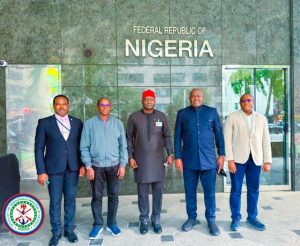
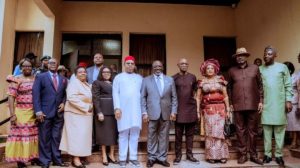
NEW YORK— The Ministry of Defence of the Federal Republic of Nigeria has convened a high-level discussion on the margins of the 81st United Nations General Assembly (UNGA 81) High-Level Week in New York, calling for a comprehensive, partnership-based, and whole-of-society approach to address Nigeria’s and the wider Sahel region’s evolving security landscape.
This was made known on Thursday, by Leah Katung-Babatunde,
SA (Media) to the Honourable Minister of Defence
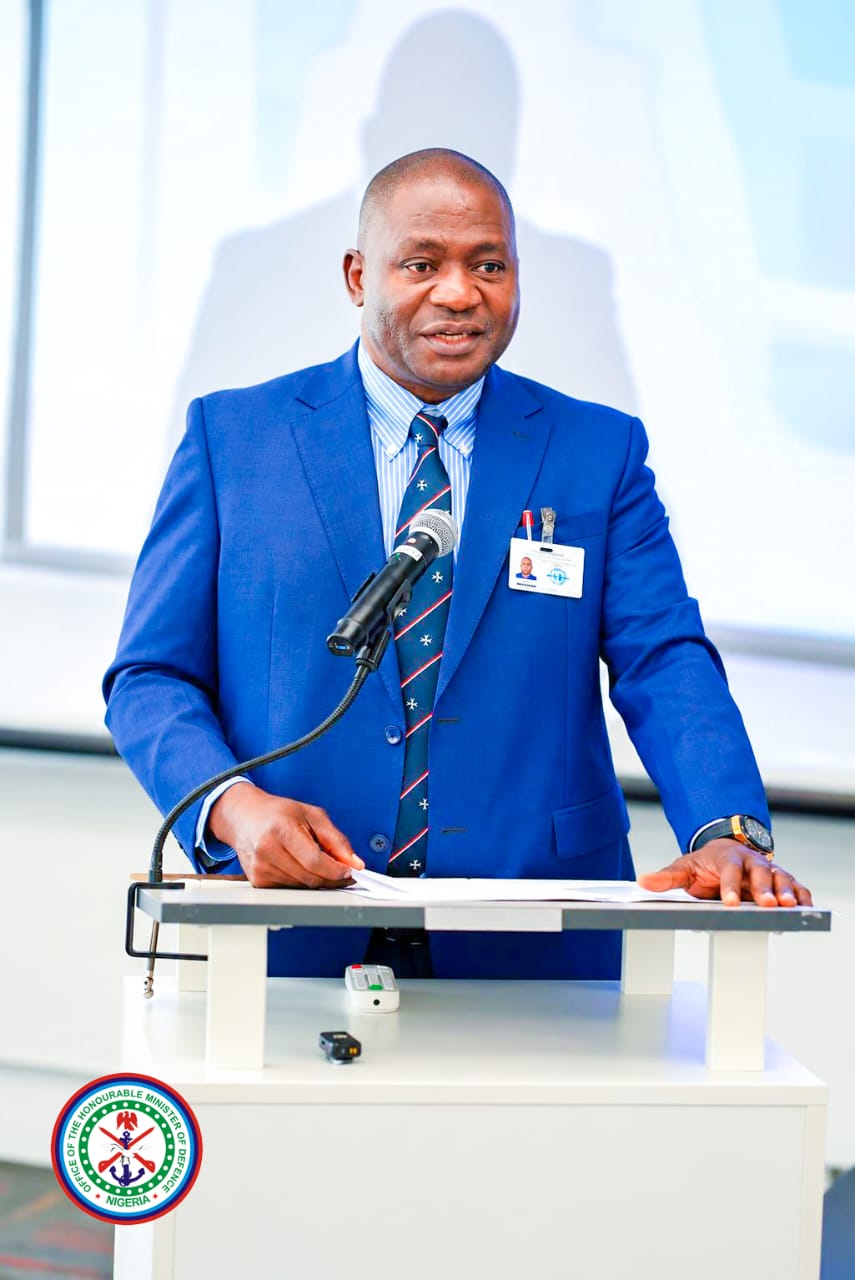
According to the Defence Minister’s spokesperson, while addressing an international audience of diplomats, security practitioners, and representatives from the United Nations, African Union (AU), and ECOWAS, the Honourable Minister of Defence, General Christopher Gwabin Musa (Rtd) OFR, emphasised that Nigeria’s security challenges like every other country have national impacts, regional consequences, and global implications.
“Our recognition that we cannot address these challenges alone is not a statement of dependence; rather, it is an acknowledgement of the multidimensional character of modern security threats and the importance of collective action,” said General Musa.
“Sustainable security requires resilient communities, effective institutions, inclusive development, and good governance.”
During the event, themed “Confronting Nigeria’s Multidimensional Security Challenges: A Whole-of-Society and Partnership-Based Approach,” the Defence Minister detailed decisive measures being implemented under the leadership of President Bola Ahmed Tinubu, GCFR that include the recruitment of an additional 22,000 personnel into the Armed Forces and the expansion and reorganization of the Nigerian Army’s divisional structure, ongoing steps toward establishing state police and dedicated forest guard arrangements to secure rural and border communities.
Others are the implementation of a presidential approval for a unified intelligence and reconnaissance programme to eliminate operational silos, enhance situational awareness, and build interoperability across Ministries, Departments, and Agencies (MDAs).
He also highlighted the strengthening of domestic defence production through support for the Defence Industries Corporation of Nigeria (DICON) to build self-reliance and reduce dependence on external arms sources and the integration of advanced technological assets, including drones for real-time surveillance and Improvised Explosive Device (IED) detection, alongside the rollout of a comprehensive national criminal database and major strides by the government.
The meeting featured a panel discussion moderated by Prof. Ibrahim Gambari, former Chief of Staff to the President and Minister of External Affairs, who recalled Nigeria’s concentric-circles foreign policy and stressed the need for Africa to position itself as an active contributor to global frameworks, particularly in Artificial Intelligence (AI).
On Homeland Security and Early Warning, Major General Adeyinka T. Famadewa (Rtd), Special Adviser on Homeland Security, advocated intelligence fusion, integrated response capabilities, and citizen reporting protection systems to anticipate emerging threats.
Major General A.K. Ibrahim (Rtd.), former Force Commander of the Multinational Joint Task Force (MNJTF) who also joined the panel called for community-based border solutions, execution of ONSA’s Border Management Strategy, revitalisation of the MNJTF, and aggressive targeting of terrorist taxation and financial networks.
Economic Security also formed part of the conversation, Dr. Kingsley Obiora, former Deputy Governor of the Central Bank of Nigeria (CBN), in his submission, emphasised that economic stability is a core pillar of national security, proposing Colombia-inspired designated economic zones to spur business recovery in conflict-affected areas.
Speaking on context-specific African solutions, Prof. Mvemba Phezo Dizolele of Johns Hopkins University cautioned against adopting external templates, urging African nations to develop context-specific solutions designed by and for local populations.
Cybersecurity expert Mr. Omosigho Ozo-Eson warned against over-reliance on foreign AI systems and underscored the urgent need to protect Critical National Infrastructure while developing indigenous cyber defence capabilities.
In his closing remarks, General Christopher Gwabin Musa (Rtd) reaffirmed Nigeria’s commitment to eradicating terrorism and banditry while commending productive defence cooperation with international partners, including the United States.
He stressed that while regional mechanisms like the MNJTF receive support from foreign partners like the EU, African member states must increasingly finance and sustain their security frameworks to guarantee regional ownership.
He further underscored ongoing government efforts to improve legal frameworks, protect vulnerable health workers in high-risk areas, and foster a stable business environment that attracts investment.
“Our objective should be straightforward,” Minister Musa concluded. “We should not merely reaffirm our understanding of the challenges; we should seek to identify concrete areas of cooperation, clear responsibilities, and practical next steps.”
Earlier in her welcome address, the Director Overseeing the Office of the Permanent Secretary, Mrs Bosede Olaniyi welcomed all participants and called for robust engagement that would translate to meaningful results for national development.
The Ministry of Defence of the Federal Republic of Nigeria is tasked with maintaining the territorial integrity of the nation, safeguarding its borders, and protecting national interests through effective military operations, strategic defence partnerships, and sustainable security governance.