Dr Ezra Yakusak’s Giant Strides at NEPC

The NEPC was established through the promulgation of the NEPC Decree No. 26 of 1976 and formally implemented in March 1977, and amended by Decree No. 72 of 1979 and later, by the NEPC Decree No. 41 of 1988.
Appended to the law as the Export (Incentives and Miscellaneous Provisions) Decree No.18 of 1986, as well as the NEPC Decree No. 64 of 1992.
The missions of the agency were to: spearhead the diversification of the Nigerian economy by expanding and increasing non-oil exports for sustainable and inclusive economic growth; promote the development, diversification of Nigeria’s export trade and; assist in promoting the development of export-related industries in Nigeria, among others.
Recalled that before the discovery of crude oil in 1956, the main stay of Nigeria’s economy came mainly from agricultural products, such as palm oil, cocoa and groundnut produced by the Eastern, Western and Northern regions respectively.
Nigeria enjoyed favourable balance of trade at the international market, through massive production and exportation of these produce.
However, with the discovery of crude oil, agricultural products and other non oil exports, were neglected and the country started to experience unfavourable balance of trade at the international market.
To address this anomaly and encourage non oil exports, NEPC was established.
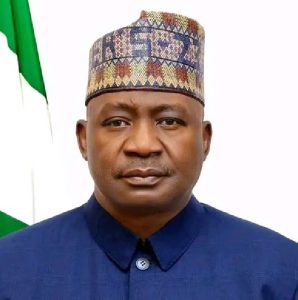
Since his appointment on 27th of November, 2021 to head the agency, Dr Ezra Yakusak, who was the Director, Policy and Strategy, NEPC, have been working assiduously attain the mandate of the organisation.
Due to the effective contribution of export trade to enhance favorable balance of trade, the NEPC is therefore expected to extend its services to the farmers at the rural areas, who produce these agricultural products, and provide the requisite knowledge on how to meet international export standards, as well as provide capital for the growth and expansion of these products in commercial quantities.
It is one thing to produce agricultural products by farmers for local consumption and export, but another to preserve them for export.
The Council is not only expected to be organising workshops at the beginning and ending of each farming season for the farmers at rural areas, but also assist them in the area of availability of fertilizers, as well as educate them on how to secure loans to further expand production. The farmers also need provision of facilities for preservation of farm products.
These farmers produce cocoa, kolanut, palm oil, palm kernel, palm kernel oil, cashew nut and oil, timber, bitter kola, groundnut, coconut, cassava, yam, onion, vegetables, rice, beans, cotton, animal skins, among others, but all these non oil exports that would be giving the country favourable balance of trade are not being well harnessed and preserved.
Although, some may think that it is the sole responsibility of those in the agriculture ministry to be carrying out the enlightenment, but if these farmers can’t produce enough for consumption, not to talk of exportation, as a result of ignorance, how then can the NEPC facilitate non oil export from farm produce?
This Council is also expected to enlighten the farmers on how to go about securing loans at the rural areas. It can do this, by organising workshops for them with bankers and invite experts who will speak on different areas towards facilitation of non oil export and on the need for banks to be giving farmers loans at affordable interest rate.
There are banks in the rural areas where few people, including farmers only open savings account, without knowing how to go about loans for expansion of their business. The ignorance on how to do all these, usually results in their inability to produce enough for domestic use, not to talk of exportation.
The NEPC at its Headquarters in Abuja in August, 2023 launched the Youth for Export Program (YEP), with the objectives to: train Nigerian youths to acquire the necessary training and skills needed to participate effectively in the export value chain; create a platform that demystifies fear, risk and uncertainties usually associated with export by youth entrepreneurs.
The Program also provides opportunity for youths to showcase their talents and abilities to participate in the export market space; on-boarded youth in business onto NEPC vertical strategic plan of Export4Survival initiatives; increased the contribution of youth-led export businesses to the Nigerian economy and; increased non-oil export earnings and made the sector a major contributor to the country’s sustainable economic development.
In the same August, the Council among others things, said as part of plans to attract foreign direct investments into the country, it had been compiling export potentials in all the 774 local government areas of the country. The CEO who stated this in Abuja, at the Export4Survival campaign hiking tour, stated that the programme tagged, ‘Export 774’ was targeted at identifying exportable products in the 774 local government areas in Nigeria.
Speaking on the ‘Export 774, the NEPC boss said the programme was inspired by the rising non-oil export valued at $4.8 billion, which according to him is the highest ever achieved by the country, even as he disclosed that the NEPC is also training exporters on adding value to their products and ensuring proper packaging that would guarantee acceptability in the world market and reduce incidents of export rejects.
In another development, according to a release from the Head, Corporate Communications of NEPC, Ndubueze Okeke, Nigeria’s quest to meet the rising global demand for cashew nuts has gradually been yielding results as the NEPC and the German Agency for International Cooperation (GIZ) GmbH are working together to increase the production and processing of the commodity which market size has been estimated to worth $7.57 Billion.
Represented by the Director of Product Development, Mrs. Evelyn Obidike, Dr Yakusak reiterated that the collaborative effort was in line with the Federal Government’s non-oil export diversification agenda, which according to him, seeks to stimulate expertise, inclusiveness, innovativeness and competitiveness.
The overall outcome, according to him is to achieve a paradigm shift by repositioning Nigeria as an exporter of a wide range of value-added high-premium quality cashew products to certified global niche markets and expedite a successful internationalization process for local stakeholders in the cashew value chain in Nigeria.
He added that:“We expect that the collaboration will further support gender empowerment, generate reliable data from empirical research for effective policy formulation and implementation, technical exchanges as well as export competency development. The NEPC-GIZ move is determined to leverage our unique competencies to deliver direct benefits to local farmers, aggregators, processors, packers, exporters, importers, service providers, export facilitating agencies and prospective investors novel solutions.”
In his remarks, the programme leader, GIZ MOVE, Mr. Florain Winckler, expressed optimism that the partnership between both parties will further go a long way in adding value to the Cashew sector by building the capacity of the operators, increasing production and processing of high-quality cashew and thereby make the product competitive in the global market. Reliable information, according to him, showed that the cashew market size is expected to reach USD 8.91 billion by 2028 at a Compound Annual Growth Rate of 3.31% from 2023 to 2028.
The NEPC has recently at its headquarters in Abuja, organised a Capacity Building Peogram, targeted at Export Desk Officers of various banks, with the theme: “Enhancing Non-Oil Export Growth through Effective Export Procedures, Documentation and Logistics.”
Attributing high interest rates and low disbursement of credit facilities to finance non-oil export trade as one of the major challenges stifling the smooth growth of non-oil export at true event, he observed that access to bank financial services by exporters is one of the major challenges stifling the smooth growth of non-oil export. This he attributed to high interest rates and low disbursement of credit facilities to finance non-oil export trade, adding that it ultimately affects the nation’s non-oil export performance, stating that most exporters lack the financial muscle required to set up modern export related industries and ensure production of high quality products.
While noting that the non-oil export sector plays very important role in the economic development of Nigeria, he said that the sector presents great opportunities for more Nigerians to participate in the global market space, just as he informed that it is on record that Nigeria is endowed with immense potential in some of the world’s most traded products such as; cocoa, ginger, cashew, soya bean, sesame seed, palm oil, rubber, shea, gum arabic, among others.